Countertop Buying GuideBeginner7 min read7/11/2026

Best Countertop Water Filter For Office Lobby: Practical Buying Guide

A practical buying guide to choosing the best countertop water filter for office lobby, including system types, sizing, installation, maintenance, and ownership cost considerations.

Why Office Lobby Needs the Right Countertop Water Filter

Choosing the best countertop water filter for office lobby is not only about buying the largest or most expensive system. The right fit depends on the water problem, how much water is used during busy periods, and whether the setup needs to protect people, fixtures, appliances, or finished results. For office lobby, the biggest issues usually come from cloudiness, taste, mineral scale, and steady flow.

Business users should start with a water test or local water report before choosing equipment. Hardness, chlorine or chloramine, sediment, iron, TDS, and pH can point you toward a softener, carbon filter, sediment filter, reverse osmosis system, or a combination setup instead of a single generic cartridge.

  • Match the system to a measured water problem, not just the keyword.
  • Check peak flow demand before choosing a size.
  • Plan for replacement filters, salt, media, or membrane costs before buying.

Best System Types for Office Lobby

For this use case, a countertop water filter should solve the main water issue without creating a maintenance burden. A point-of-use filter is usually enough when the goal is better drinking, coffee, or ice water. A whole-house filter or softener makes more sense when every sink, shower, appliance, or wash station is affected.

If hardness is the main problem, a true ion-exchange softener is still the most direct solution. If scale is the concern but salt discharge or plumbing constraints matter, a salt-free conditioner may be worth comparing. If drinking-water purity is the priority, reverse osmosis normally provides broader reduction than a simple carbon cartridge.

  • Use softeners or conditioners for hardness and scale control.
  • Use carbon filtration for chlorine, taste, and odor.
  • Use reverse osmosis when high-purity drinking or process water matters.

Sizing, Flow Rate, and Capacity

Sizing is where many buyers make mistakes. A small cartridge may look affordable, but it can clog quickly or restrict flow if the water demand is high. For office lobby, estimate the number of fixtures, appliances, or people using water during the busiest hour, then compare that demand with the rated service flow of the system.

For softeners, compare grain capacity against daily gallons and hardness level. For filters, compare cartridge life, micron rating, and gallons treated. For RO systems, check production rate and storage or tankless flow. Oversizing can waste money, but undersizing creates pressure drops and frequent maintenance.

  • Check service flow rate, not only total gallon capacity.
  • Size softeners from daily gallons multiplied by hardness grains.
  • Choose cartridges and membranes with realistic replacement intervals.

Installation and Setup Considerations

Most systems for this keyword install at the countertop or point-of-use connection. Before ordering, measure available space, confirm pipe size, and identify drain, power, and shutoff access if the system requires them. For leased spaces, get approval before modifying plumbing.

DIY installation can work for simple countertop, shower, or inline filters. Commercial softeners, whole-house units, and RO systems that require drain connections are better handled by a plumber if you are not comfortable cutting pipe, adding valves, or meeting local code. After installation, flush the system fully and check for leaks under normal pressure.

  • Measure space for tanks, housings, and cartridge changes.
  • Confirm drain and power requirements before purchase.
  • Flush new filters and recheck all fittings after installation.

Maintenance, Ownership Cost, and Red Flags

The best system is one that will actually be maintained. For this use case, plan for cartridge replacement, leak checks, and periodic flushing. A cheaper unit can become expensive if cartridges are proprietary, hard to find, or replaced too often.

Red flags include vague contaminant claims, no listed flow rate, no replacement cartridge cost, and no clear installation manual. For drinking-water claims, look for NSF/ANSI standards or third-party test data. For business use, downtime matters, so keep spare cartridges or salt on hand and document the service schedule.

  • Compare annual ownership cost, not just purchase price.
  • Avoid systems with unclear replacement parts or vague claims.
  • Keep a simple maintenance log for consistent performance.

How to Choose the Best Option

A practical shortlist should include one budget-friendly option, one higher-capacity option, and one low-maintenance option. Compare each against your water test, installation limits, and the consequences of poor water quality for office lobby.

For most buyers, the safest path is to solve the biggest water problem first. If hardness is damaging fixtures or affecting hair and skin, prioritize softening or scale control. If taste, odor, or drinking-water safety is the concern, prioritize filtration certifications and contaminant reduction. When both are present, combine stages instead of expecting one device to do everything.

  • Start with water testing or a current municipal report.
  • Prioritize the highest-impact problem first.
  • Choose a system you can install, service, and afford long term.

Recommended Countertop Filters

These countertop picks are practical for renters, small kitchens, and households that want simple setup.

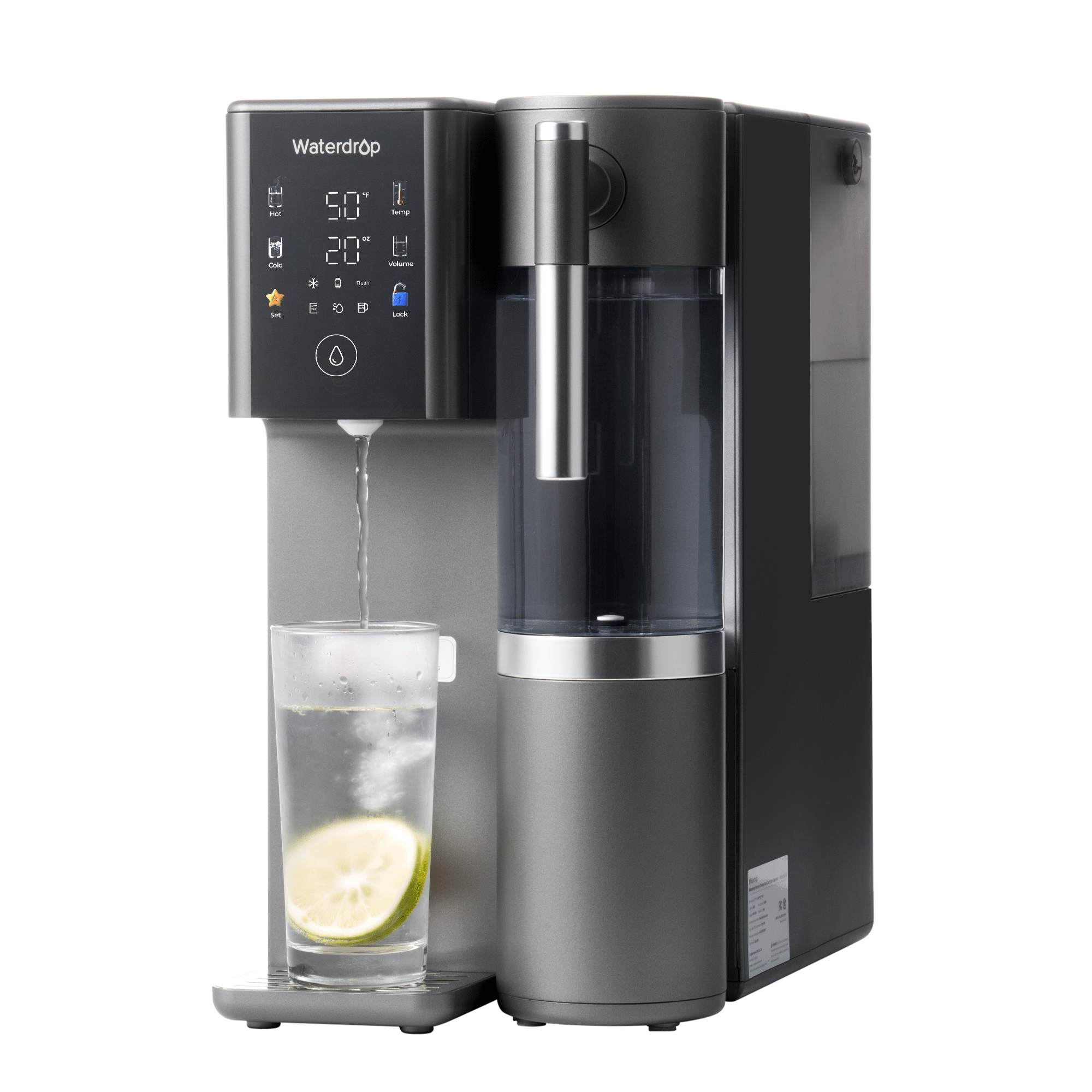
WaterDrop N1 Countertop Reverse Osmosis System

WaterDrop N1 Countertop Reverse Osmosis System

4.7
$299-399

Countertop RO dispenser focused on simple setup, strong day-to-day convenience, and cleaner tasting water without under-sink installation.

Best for

Renters and small households who want RO filtration without permanent kitchen modifications

  • +No under-sink plumbing installation required
  • +Countertop design is practical for renters and temporary setups
  • +Reverse osmosis filtration improves taste and clarity
WaterDrop A2 RO Hot Cold Water Dispenser

WaterDrop A2 RO Hot Cold Water Dispenser

4.8
$379-499

Best-selling countertop RO system with hot and cold water, smart touch screen, and no installation required.

Best for

Renters and those wanting RO water without installation

  • +No installation required
  • +Hot and cold water on demand
  • +Smart touch screen display

Best Countertop Water Filter For Office Lobby: Practical Buying Guide - Frequently Asked Questions

What is the best countertop water filter for office lobby?

The best option depends on the measured water issue. For hardness and scale, compare softeners or salt-free conditioners. For taste, odor, or drinking-water contaminants, compare certified filtration or reverse osmosis systems.

Do I need a water test before buying?

Yes. A water test helps confirm hardness, chlorine or chloramine, iron, sediment, pH, and other issues so you do not buy a system that solves the wrong problem.

Can I install this type of system myself?

Simple shower, countertop, and some under-sink filters are often DIY-friendly. Whole-house filters, commercial softeners, and RO systems with drain connections may require a plumber.

How often will filters or media need replacement?

Replacement timing depends on water quality and usage. Many cartridges last 3 to 12 months, RO membranes often last 2 years or more, and softener resin can last several years with proper care.

Will this reduce water pressure?

A properly sized system should not cause major pressure loss. Pressure problems usually come from undersized housings, clogged cartridges, or systems installed without enough flow capacity.

Related Resources

Continue with a few relevant reads plus trusted standards references.

On WaterFiltrationPro